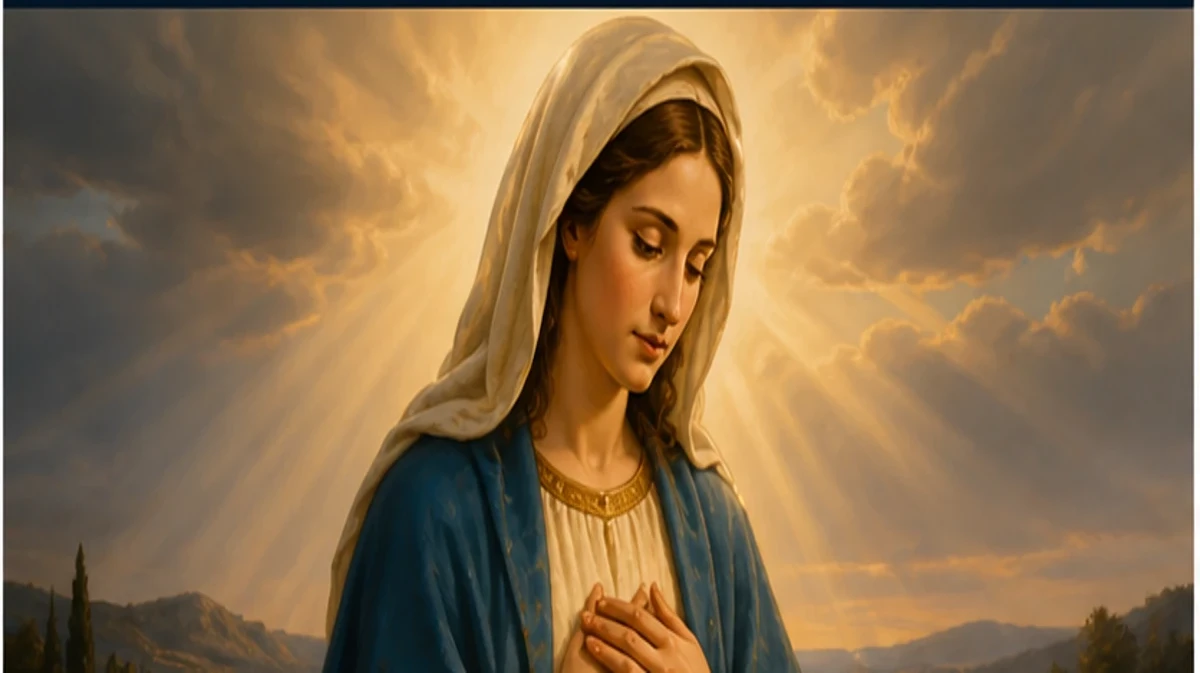
When people ask, “Do Catholics overemphasize Mary?” they usually have one concern in mind:
Mary doesn’t seem to appear very often in the Bible, so how important can she really be?
That question deserves a clear answer. But to answer it well, you have to read Scripture the right way—not by counting how often someone appears, but by paying attention to what God reveals when they do.
Does the Bible Measure Importance by Frequency?
It’s easy to assume that if someone is important, they should show up everywhere in Scripture. But that’s not how the Bible works.
Several apostles are barely mentioned outside the Gospels, and some don’t appear in Acts at all. Yet Scripture still says the Church is built on the foundation of the apostles (Ephesians 2:20).
Here’s the principle to keep in mind:
In Scripture, importance is revealed by role, not repetition.
Once you apply that to Mary, the question changes. Instead of asking, “Why isn’t she mentioned more?” you start asking, “What is God showing us when she is mentioned?”
Luke 1: What the Bible Says About Mary
If you want to understand Mary in the Bible, start with Luke 1.
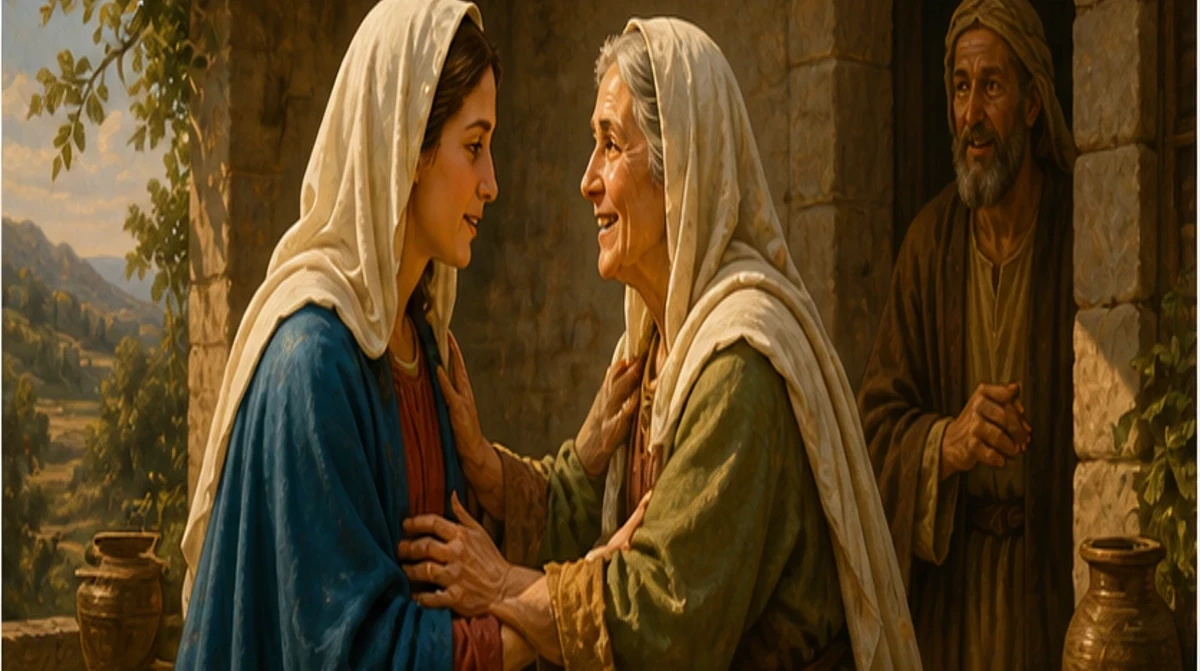
Elizabeth greets Mary with these words:
“Blessed are you among women… and why is this granted to me, that the mother of my Lord should come to me?” (Luke 1:42–43)
Notice what’s happening here.
Elizabeth is speaking while filled with the Holy Spirit. This is not a casual greeting. It is Spirit-inspired truth.
Mary is called:
- Blessed among women
- The mother of the Lord
That alone should shape how you think about her role.
Then something even more striking happens. John the Baptist, still in the womb, leaps for joy at Mary’s presence. Scripture presents this as a response guided by the Holy Spirit.
The message is clear: Mary’s presence is not ordinary.
If Scripture itself, through the Holy Spirit, calls Mary “blessed” and “the mother of the Lord,” then honoring her is not exaggeration—it’s alignment with Scripture.
“All Generations Will Call Me Blessed”
A few verses later, Mary says:
“From now on all generations will call me blessed” (Luke 1:48)
This isn’t exaggeration. It’s prophecy.
So ask yourself:
If Scripture says all generations will call her blessed, what should that look like today?
At minimum, it means honoring Mary is not adding to Scripture—it’s responding to it. Ignoring her completely would miss what Scripture itself is pointing us toward.
The Wedding at Cana: Mary in Action
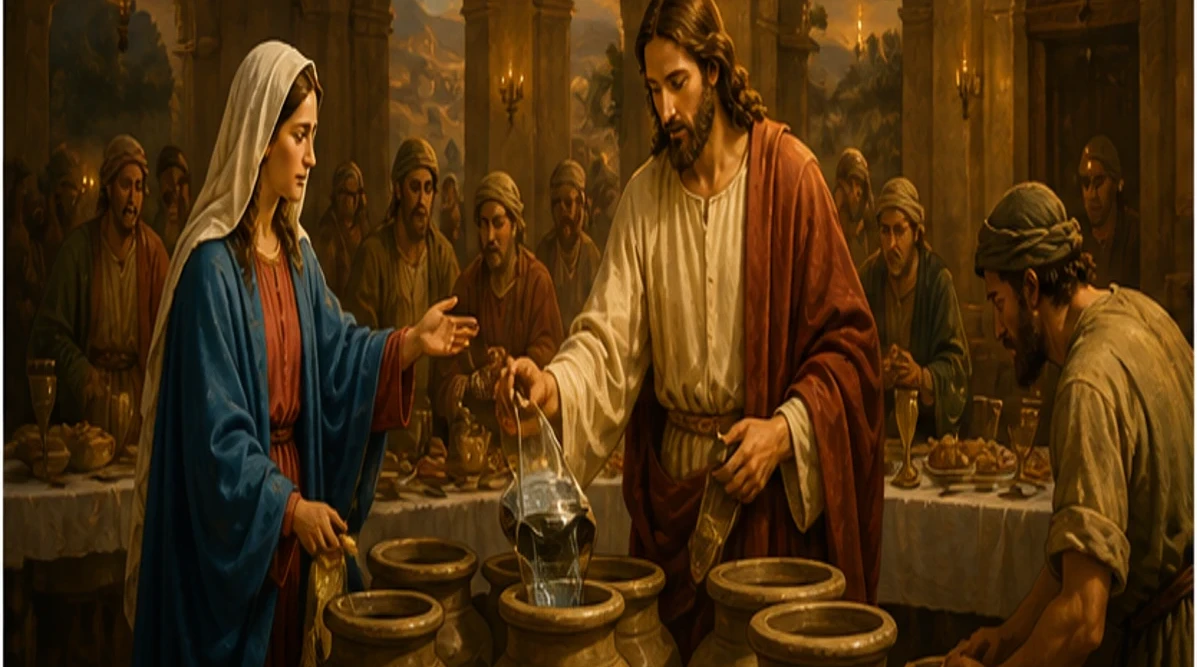
Mary appears again in John 2 at the wedding at Cana.
A problem arises. The wine runs out. In that culture, this would have brought real embarrassment to the family hosting the wedding.
Mary steps in and says to Jesus:
“They have no wine.”
That simple statement reveals three things:
- She knows who her Son is
- She trusts His power
- She cares about the people in front of her
She doesn’t try to control the situation. She brings the need to Jesus and leaves it with Him.
Did Jesus Rebuke Mary?
Some point to Jesus’ response:
“My hour has not yet come” (John 2:4)
and take it as a rebuke.
But if you keep reading, the text answers that question for you.
Mary turns to the servants and says:
“Do whatever he tells you” (John 2:5)
She doesn’t step back. She doesn’t act corrected. She moves forward with confidence.
And Jesus performs His first miracle.
If this were a rebuke for wrongdoing, the passage would not end with a miracle performed in response. The flow of the narrative shows that this is not a correction, but a moment that reveals both Jesus’ mission and Mary’s trust in Him.
Mary’s Role: Bringing Needs to Jesus
At Cana, Mary does something simple and familiar.
She brings a need to Jesus and trusts Him to act.
That doesn’t replace Christ—it points to Him.
The Bible shows this same pattern elsewhere. Christians are called to pray for one another (James 5:16). God often works through people as part of His plan.
Mary’s role at Cana fits that same biblical pattern: bringing needs to God and trusting Him to act.
Her final recorded instruction says it best:
“Do whatever he tells you.”
Keeping Christ at the Center
It’s important to be clear here.
Jesus performs the miracle—not Mary.
Jesus is the source of grace and salvation (John 14:6; Acts 4:12).
Catholics do not place Mary on the same level as Christ. Her role depends entirely on Him and only makes sense because of Him.
But Scripture shows that God chose her for a unique place in salvation history. Ignoring that doesn’t protect Christ’s role—it overlooks part of God’s plan.
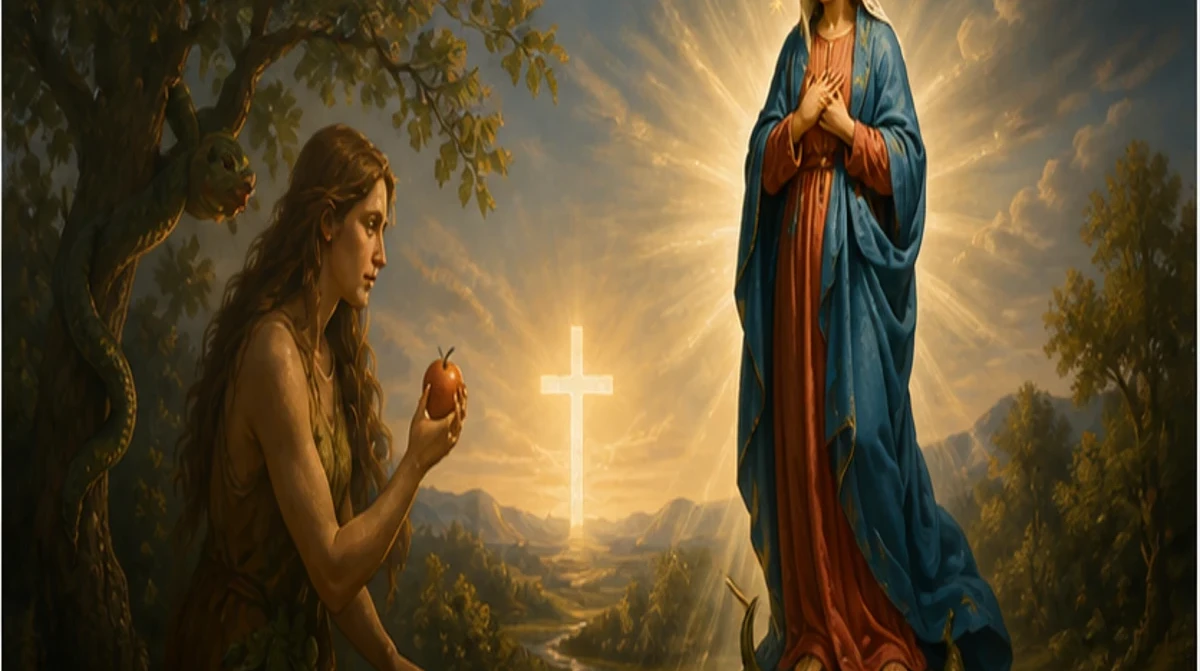
The New Eve: A Biblical Pattern
There’s also a deeper pattern that early Christians recognized.
In Genesis, the first woman is connected to the fall. In John’s Gospel, Jesus calls Mary “woman.”
That connection is not random.
Early Christians saw Mary as the “New Eve,” whose obedience stands in contrast to Eve’s disobedience.
As Irenaeus of Lyons wrote in the second century:
“The knot of Eve’s disobedience was loosed by the obedience of Mary.”
Christ is still the one who saves. Mary’s role shows how God involves human cooperation in His plan.
So, Is Mary Overemphasized?
When you step back and look at Scripture, the answer becomes clear.
The Bible presents Mary as:
- Blessed among women
- The mother of the Lord
- Present at key moments in salvation history
- A model of faith and trust
- Someone who leads others to Christ
That is not a minor role.
Catholics are not adding something new. They are taking seriously what Scripture already shows.
Final Thought
Mary doesn’t compete with Jesus. She points to Him.
Her own words make that clear:
“My soul magnifies the Lord” (Luke 1:46)
If your view of Mary removes her from the story, you may be missing what Scripture reveals.
But if your view of Mary leads you to trust Christ more, listen to Him more, and follow Him more closely, then you’re seeing her role the way the Bible presents it.
That’s not overemphasis.
That’s taking Scripture at its word.